
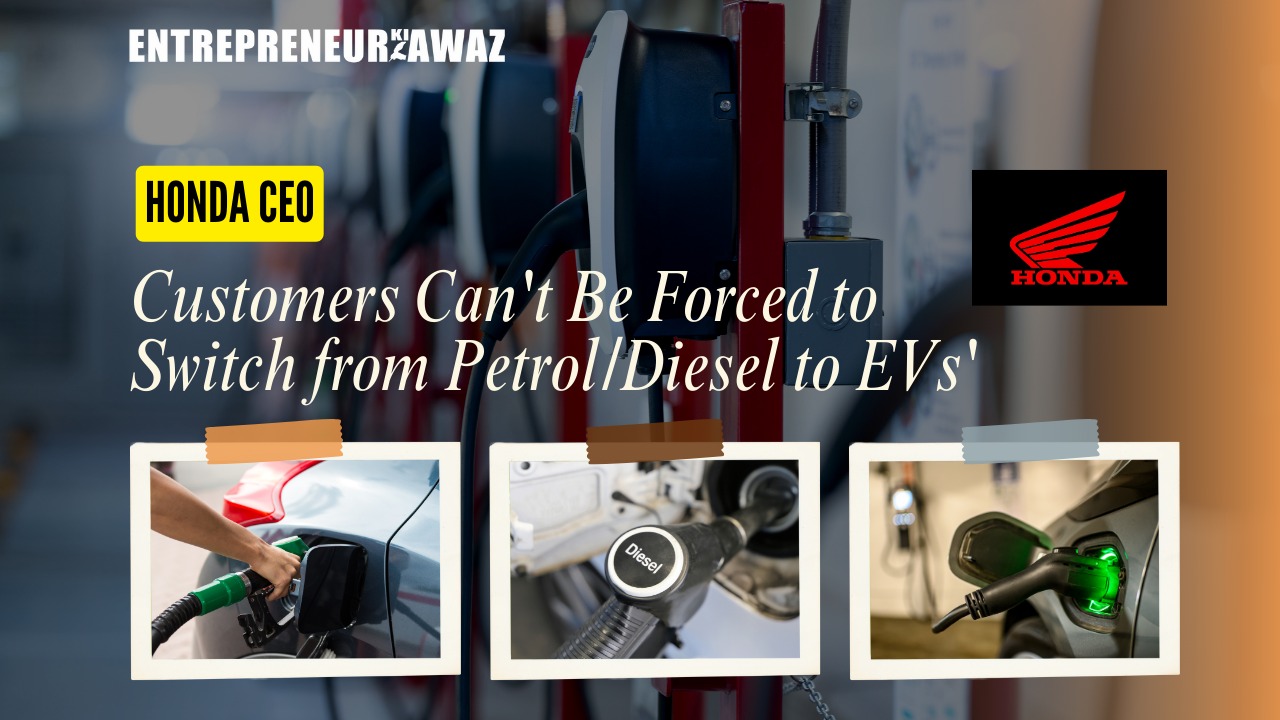
In recent years, automakers have heavily promoted electric vehicles (EVs), driven largely by governmental and stakeholder pressures. However, many manufacturers are now scaling back their EV plans, shifting focus to hybrid and internal combustion engine (ICE) vehicles. Honda’s CEO, Toshihiro Mibe, recently addressed this shift, emphasizing that forcing customers to transition from ICE vehicles to EVs is neither practical nor effective.
Honda CEO’s Perspective
During the Monterey Car Week, Mibe stated, “You can’t force the customer to change their mind. Incentives can help to some degree, but people in regions like the Midwest, where charging stations are scarce, won’t switch from ICE to BEV.”
He further explained, “Even with incentives, the shift is challenging. We need to gradually prepare the ecosystem and let consumers transition at their own pace.”
Mibe also noted that the growth of charging infrastructure is slow but steady, and automakers are closely monitoring its progress to support the shift toward electrification.
What This Means for EV Adoption
Honda’s CEO acknowledges that the current EV infrastructure is inadequate to support a large-scale shift. Issues such as insufficient charging stations, range anxiety, and high costs continue to deter consumers. Mibe stressed that simply incentivizing EV purchases is not enough; systemic challenges must first be addressed.
Focus Shifts to Hybrids
With EV sales slowing, many automakers, including Honda, are focusing more on hybrids as a practical alternative during the transition to full electrification. Hybrids combine ICE engines with electric motors, offering reduced emissions and improved fuel efficiency without the downsides of limited range or dependency on extensive charging infrastructure.
Mibe outlined Honda’s strategy, saying, “We believe in a multi-pathway approach. Hybrids, hydrogen fuel cells, and EVs will all play a role in the future of mobility. Flexibility is key, as each market has unique needs.”
Other Automakers Adjusting EV Strategies
Honda isn’t alone in this shift. Ford and Mercedes-Benz have also scaled back their EV investments, citing high costs, supply chain challenges, and lukewarm consumer demand. These companies are redirecting resources toward hybrids and refining ICE technologies.
Globally, regions like Europe and China continue to push EV adoption through stringent regulations and incentives. However, markets such as the U.S. and India are recognizing the need for a diversified approach, where hybrids and ICE vehicles remain relevant.
Decline in EV Sales
Recent data highlights a global decline in EV sales. Battery Electric Vehicles (BEVs) accounted for 7.0% of the light-duty vehicle market in early 2024, down from 8.1% in late 2023.
In China, the largest EV market, growth has slowed after years of rapid expansion. Europe is also experiencing a plateau despite strict emissions regulations. Similarly, in India, Tata Motors, a leading EV manufacturer, reported a 15% year-over-year drop in EV sales by mid-2024.
Looking Ahead
The automotive industry is navigating a complex landscape as it strives to balance innovation with practicality. While EVs represent the future, the transition must align with consumer readiness, infrastructure development, and affordability. Hybrid technology and ICE advancements will likely remain key players in the journey toward sustainable mobility.